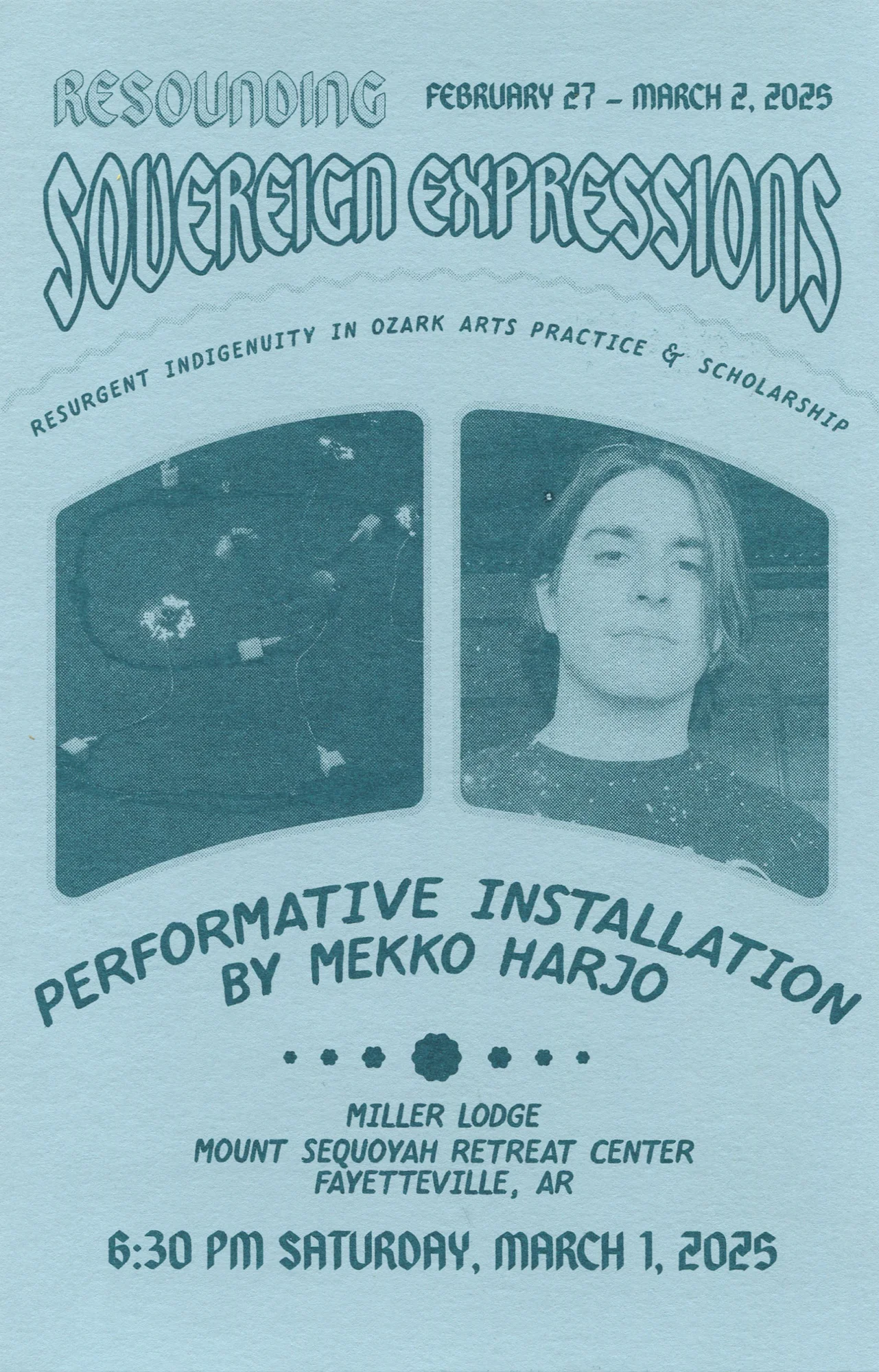
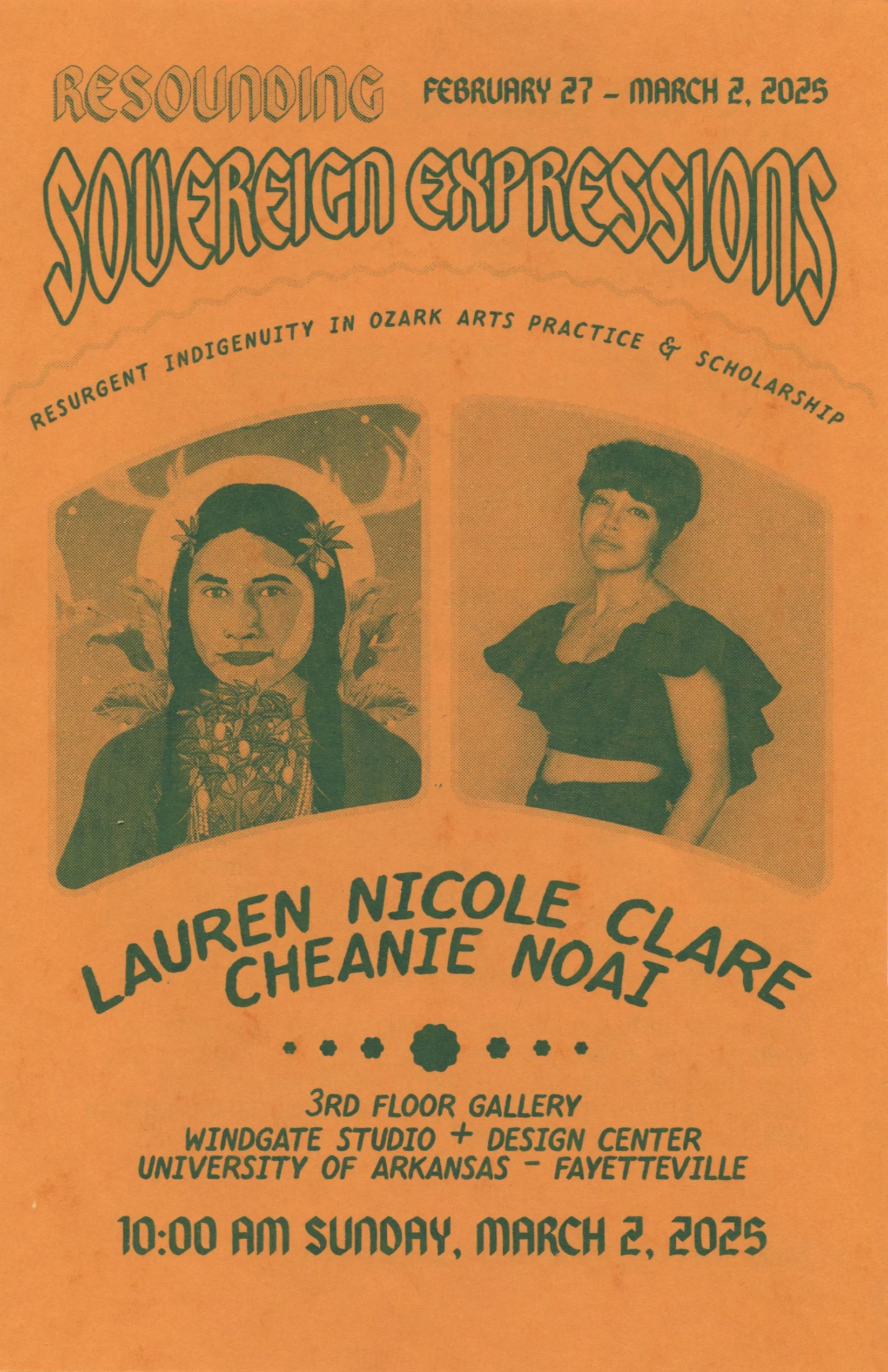
Resounding Sovereign Expressions: Resurgent Indigenuity in Ozark Arts Practice & Scholarship, a 4-day Convening Program
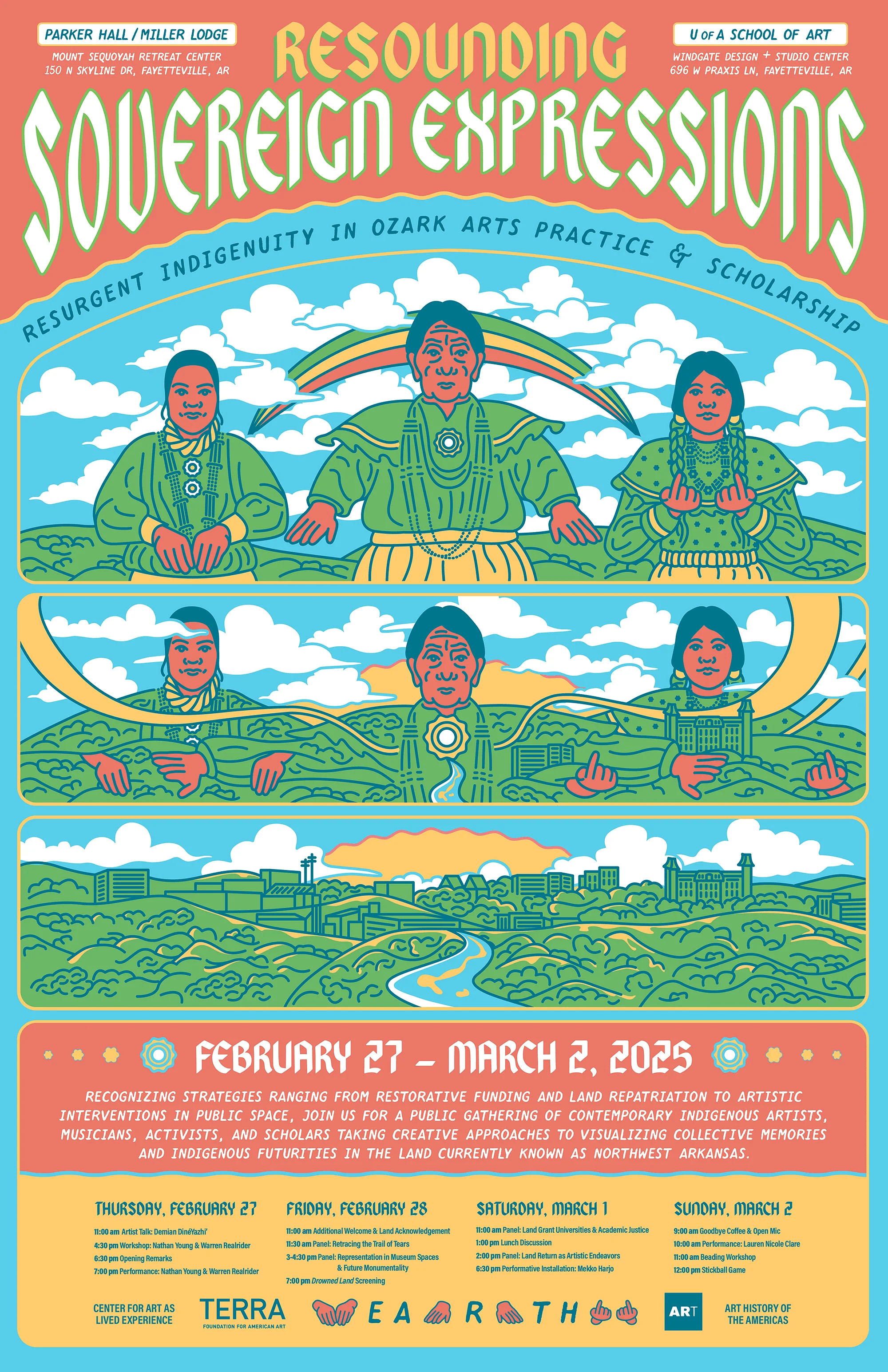
On February 27-March 2, 2025, the University of Arkansas - Fayetteville’s Center for Art as Lived Experience hosted Resounding Sovereign Expressions: Resurgent Indigenuity in Ozark Arts Practice & Scholarship, a gathering of contemporary Indigenous artists, musicians, activists, and scholars taking creative approaches to visualizing collective memories and Indigenous futurities in the land currently known as Northwest Arkansas. The program, supported by a $25,000 Terra Foundation Convening Grant, took place as a series of public round table discussions, artist talks, and musical performances spanning the four day period across two locations: the Studio + Design Center on MLK, Mount Sequoyah’s Parker Hall, and Miller Lodge.
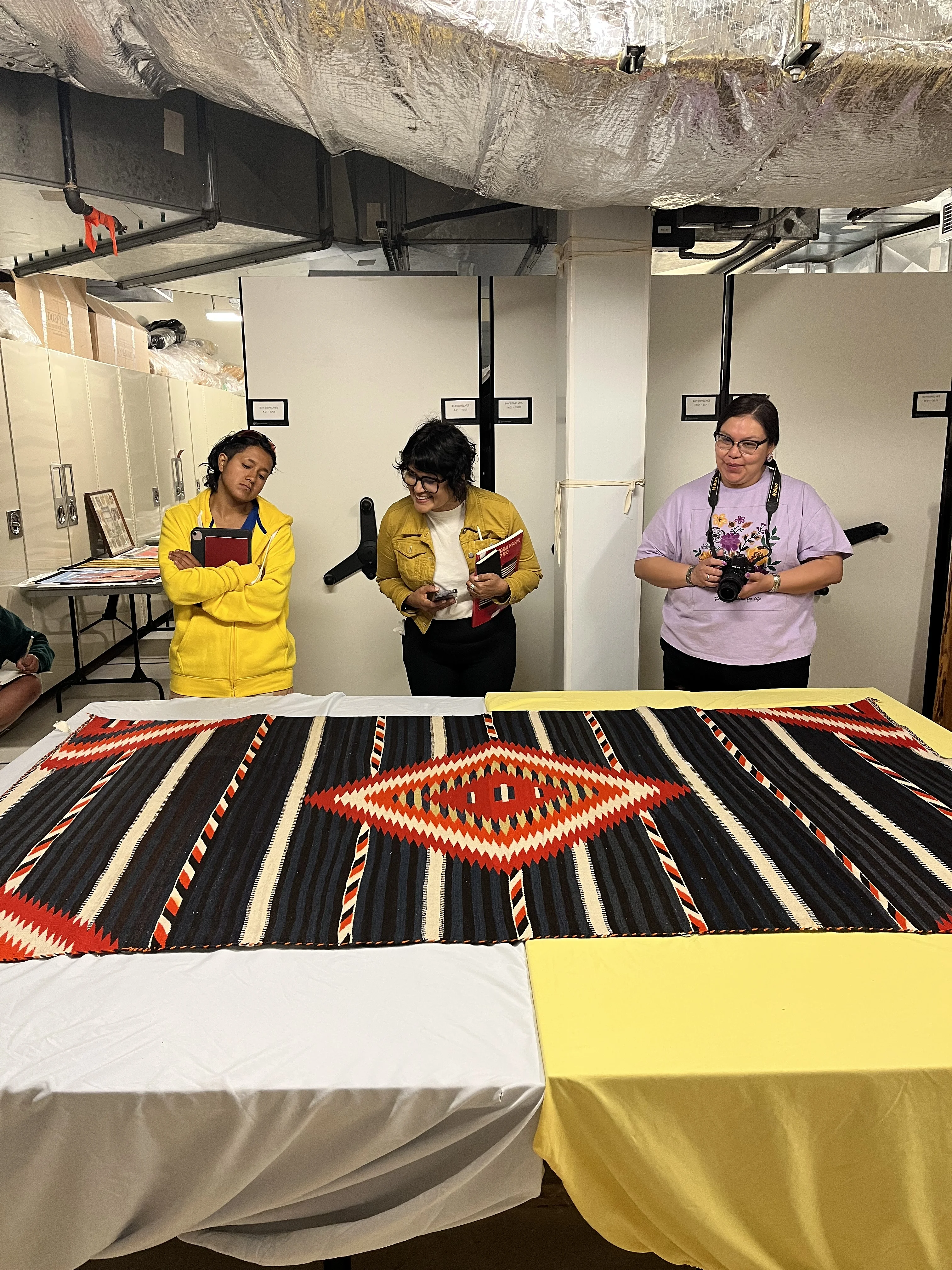
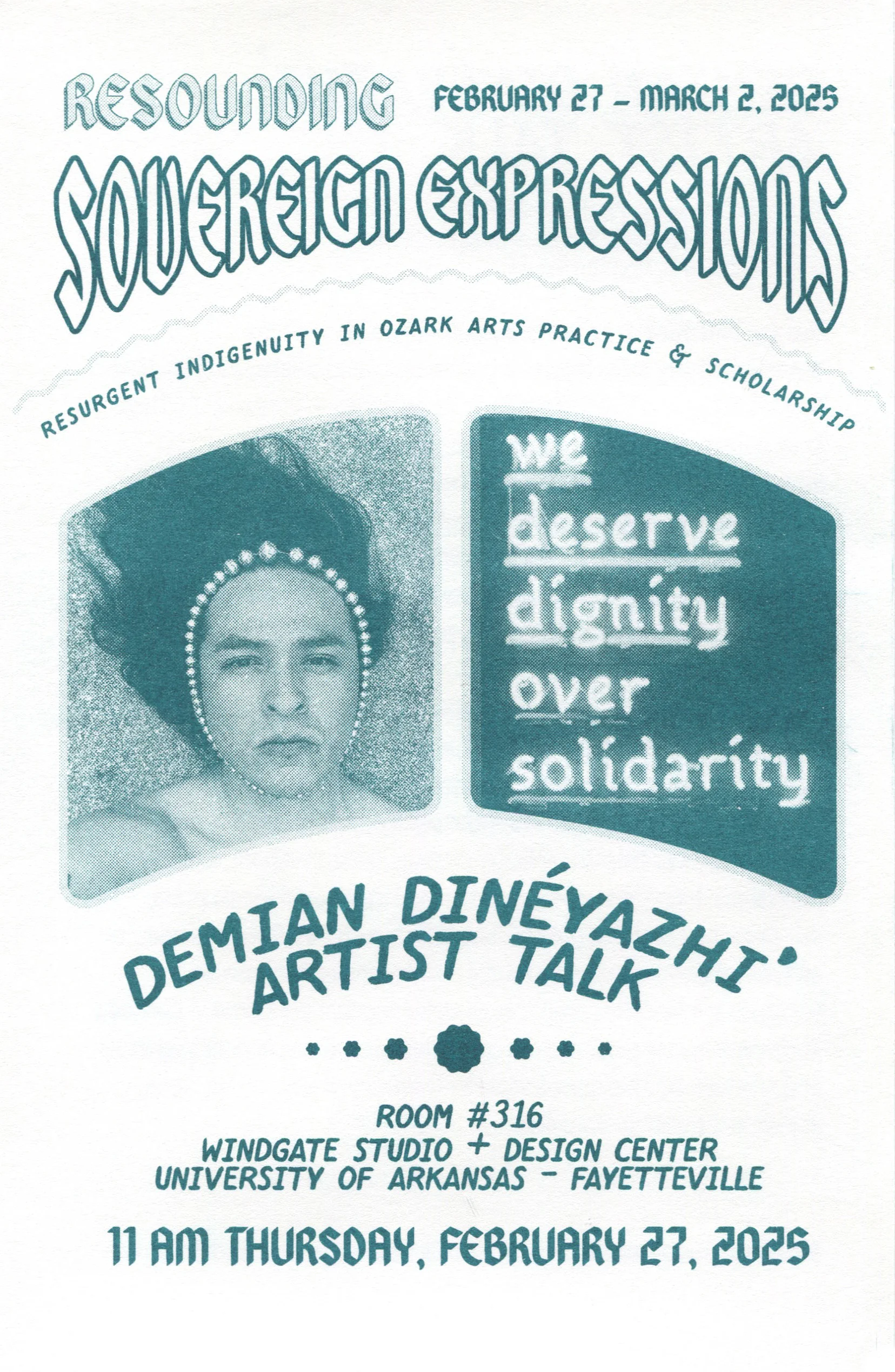
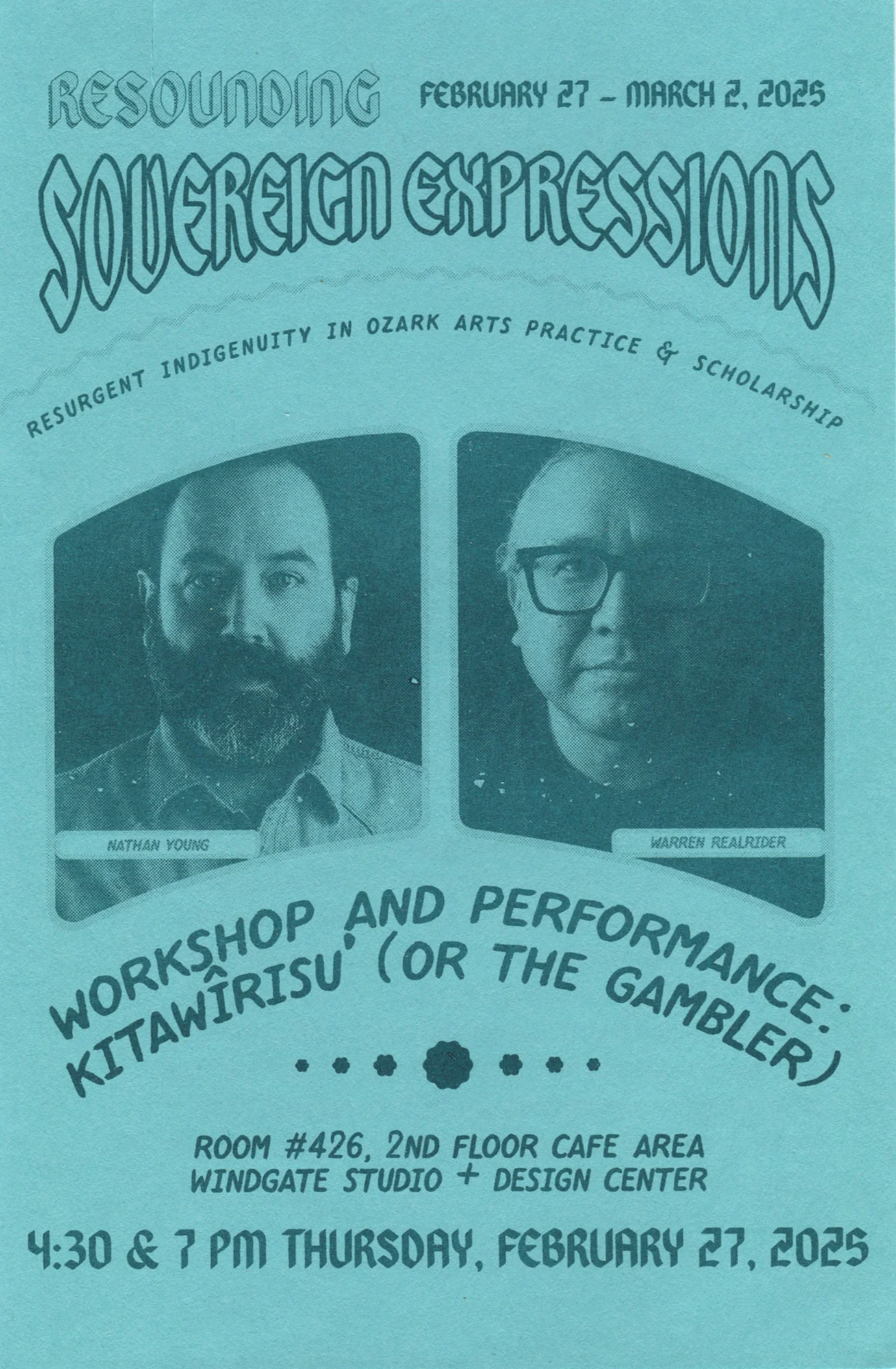
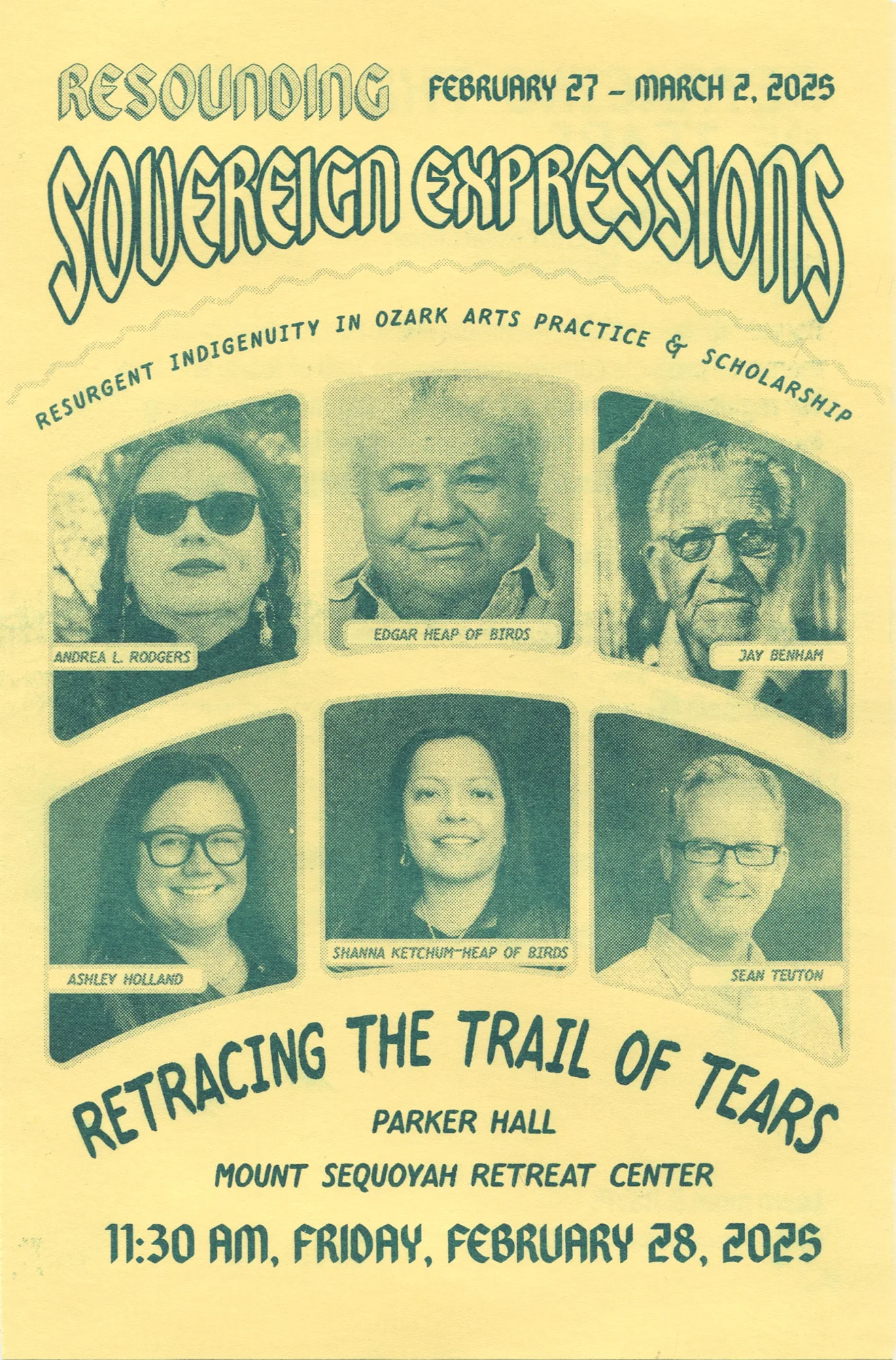
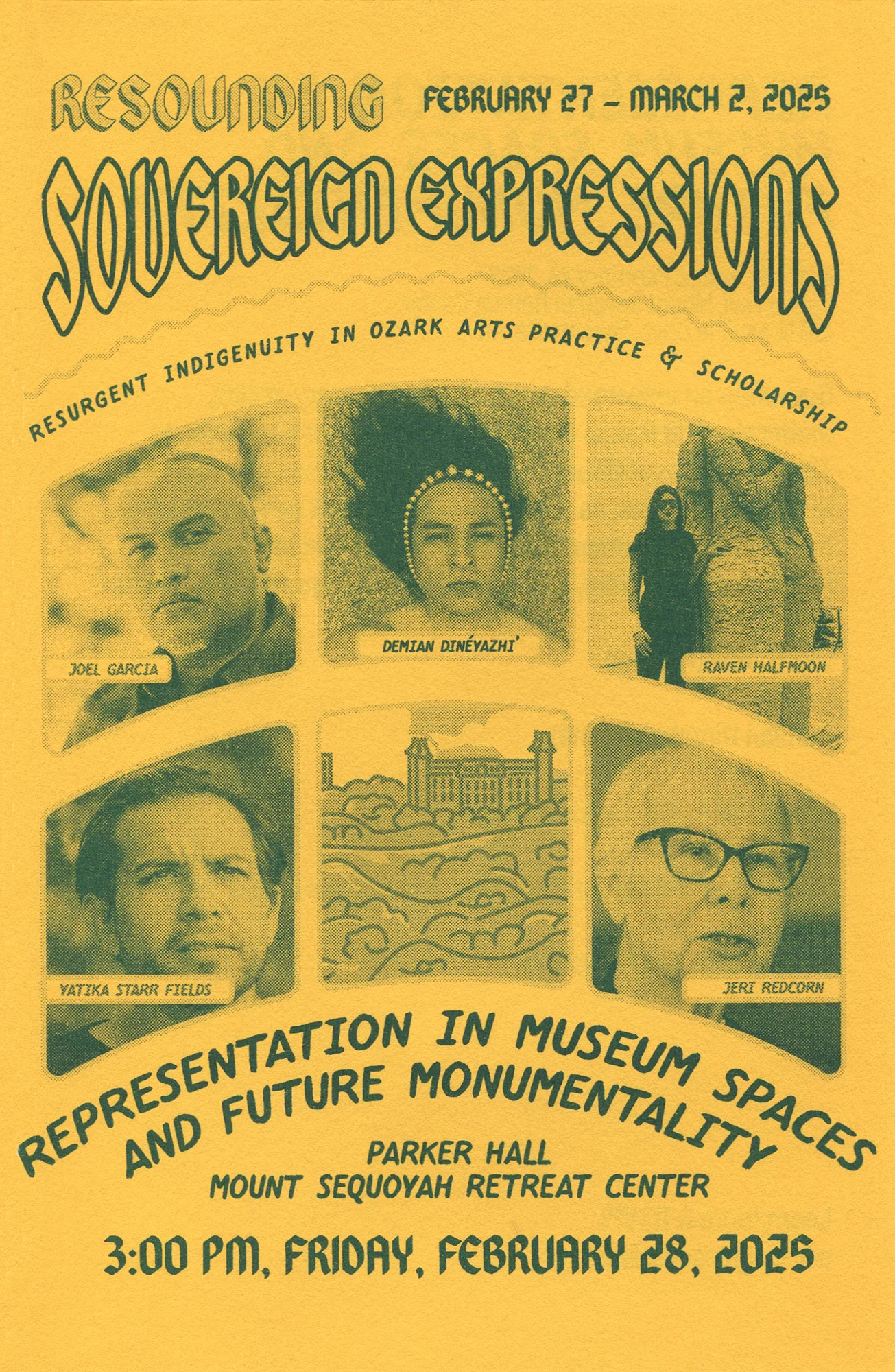
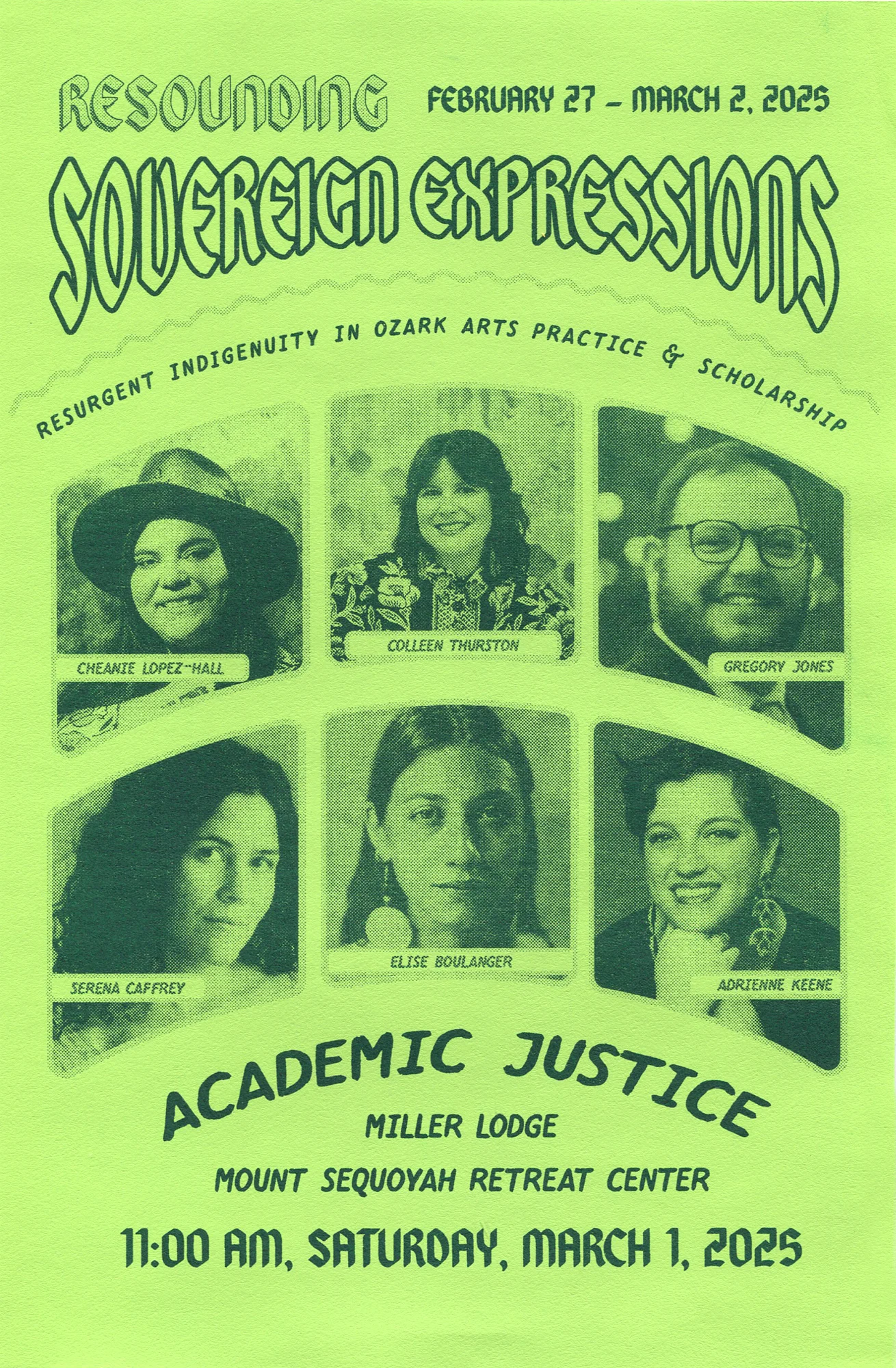
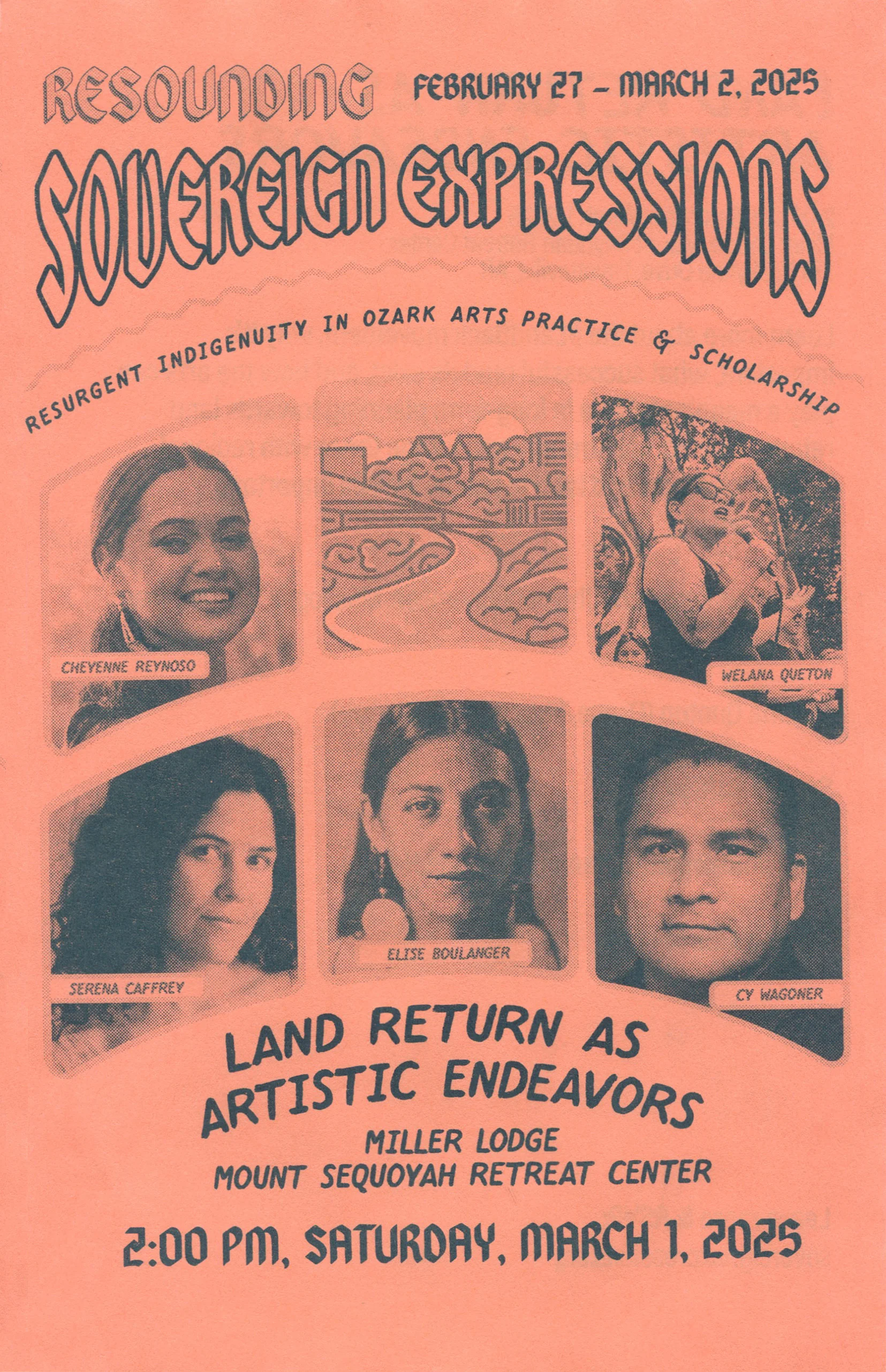
The program kicked off Thursday, February 27th at the Studio & Design Center with an opening address and performance, followed by discussions at Mount Sequoyah on Friday and Saturday on the topics of Indigenous representation in museum spaces, land return, land grant universities and academic reparations, monumentality and future monuments, and commemorating the Trail of Tears. Sunday rounded out the weekend with additional performances and tabling by local organizations. Altogether, the weekend included performances by Nathan Young (Delaware Tribe of Indians, Pawnee and Kiowa descent), Warren Realrider (Pawnee, Crow), Mekko Harjo (Quapaw), the University’s own Lauren Clare (Chickasaw); a workshop with Demian DinéYazhi (Diné); the screening of a film by Colleen Thurston (Choctaw), and dialogue amongst many notable artists including but not limited to: Yatika Starr Fields (Cherokee, Osage, Muscogee Creek), Raven Halfmoon (Caddo Nation), Edgar Heap of Birds (Cheyenne and Arapaho), and Joel Garcia (Huichol).
This program aimed to recognize strategies ranging from restorative funding and land repatriation to artistic interventions in public space. Conversations offered pathways toward re-Indigenizing spaces where Native people have been historically removed and erased, as well as understanding the ways rapid gentrification further obscures and reaffirms the settler-colonial histories of that removal. The program aimed to recognize implications of dispossession and, in particular, the legacy of land grant universities, by prioritizing Indigenous thinkers as speakers and contributors who hold ties to the local region, as well as across what is now referred to as the United States.
On the heels of the 2024 Sovereign Futures, hosted by the University of Tulsa, Resounding Sovereign Expressions: Resurgent Indigenuity in Ozark Arts Practice & Scholarship demonstrated persistent regional lifeways of Indigenous people that are so often obscured in institutional spaces, and promoted artistic truth-telling practices about place histories and futures. An Advisory Board comprised of local Indigenous artists and educators, as well as representatives from the Native American Student Services (NASS), the Native American Student Association (NASA), Indigenous Studies, the Multicultural Center, and UArk Libraries, were instrumental in the collaborative development of the program with co-curators Aaron Turner, Elise Boulanger (Osage), and Serena Caffrey.
Aaron Turner, who served as the Director of the Center for Art as Lived Experience, expressed his gratitude that “the Terra Foundation recognized the importance and prescience of this program regionally, awarding C.A.L.E. its first major grant.” He continued: “As Director for the past three years, I’ve always imagined this level of programming for the space, and it’s been a pleasure collaborating with our Advisory Board and participating artists. C.A.L.E. is a space to bridge the gap between art and lived experience, and that’s what this convening represents, bringing national and regional voices from Indigenous communities to speak on topics about the past, present, and future.”
“As a Citizen of the Osage Nation, I am actively deepening my knowledge of this region—our ancestral homelands—and the Nations who have inhabited this place for longer than memory,” said co-curator Elise Boulanger. “The best way to do this is by listening to and collaborating with Native people who hold ancestral knowledge, community teachings, and remember this place through their own lived experiences. Resounding Sovereign Expressions invites a broader community to consider the land that is referred to as Northwest Arkansas and the United States—a place many of us call home—as living, and walk away grounded in their place and responsibilities to the land.”
C.A.L.E. research assistant and program co-curator Serena Caffrey reflected that “the histories of our local region are rarely discussed and, when they are, are often represented through outdated tropes. Our public education system does a major disservice to our young people in telling the truths of our region, who stewarded and continues to steward these lands, and why and how we find ourselves living and studying in them in the way that we are now. Art is an immensely powerful way to tell this story, and I feel humbled and immensely grateful to be in collaboration with the incredible group of artists, scholars, and advisory board members who will be joining us in February and March.”
“This program not only uplifts Native voices but also creates a space for meaningful dialogue and artistic expression, inviting all to engage with the rich history and vibrant futures of Indigenous communities. We look forward to collaborating with artists, scholars, and community members as we continue to honor and amplify our cultural legacies,” said Gregory Jones, Native American Student Services Director and convening advisor.
Poster design and illustration by Cheanie Lopez-Hall.